
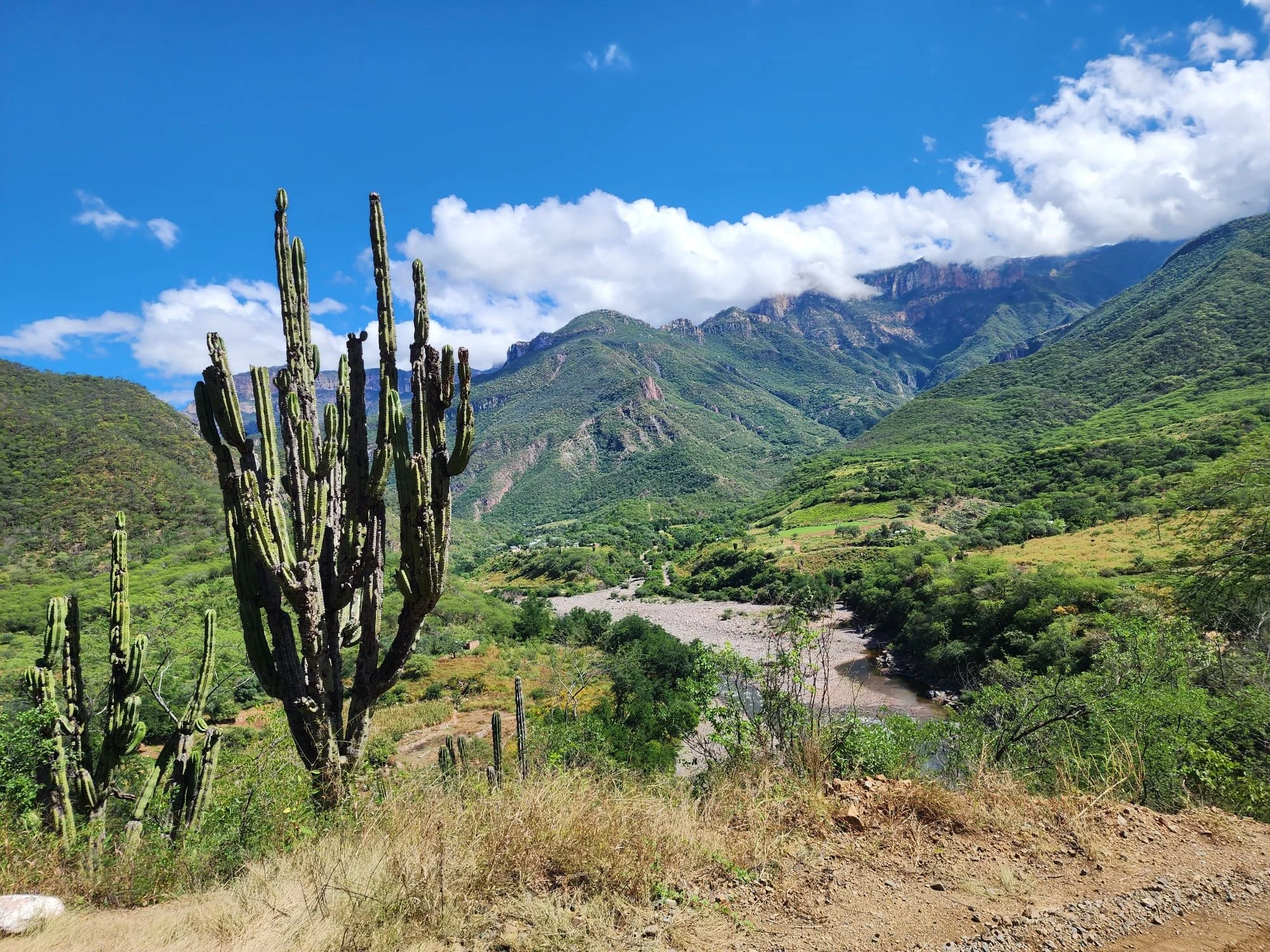
Protecting the Sierra Tarahumara
Why the Sierra Tarahumara Needs a Different Kind of Tourism
Copper Canyon as a geocultural landscape and why protecting what makes it extraordinary matters more than simply attracting more visitors
There is a tendency to measure success in numbers.
More visitors. More hotel rooms. More attractions. More infrastructure. More international recognition.
But some places demand a different measure of success. The Sierra Tarahumara — home to the vast system of canyons collectively known as Mexico’s Copper Canyon — is one of them.
This is not simply a spectacular natural attraction. We believe it should increasingly be understood as a geocultural landscape: a place where extraordinary geology, ecosystems and generations of human presence are deeply interconnected.
The concept of geocultural heritage is increasingly used within geoheritage research to describe places where particularly strong relationships exist between geology and culture.[1] Landscapes are not simply collections of physical, biological and human features; they are also shaped by the interactions between societies and the physical environment.[1]
That relationship is fundamental to understanding what makes the Sierra Tarahumara exceptional. And it is also why we believe its tourism future needs to be approached carefully.
A landscape millions of years in the making
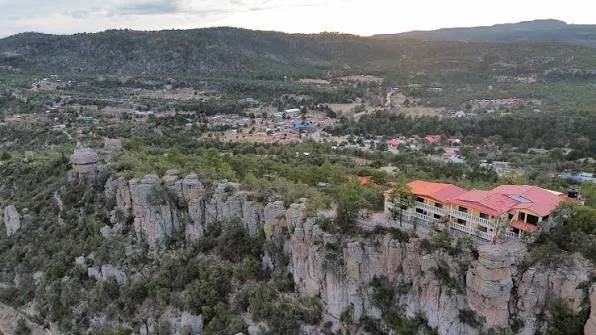
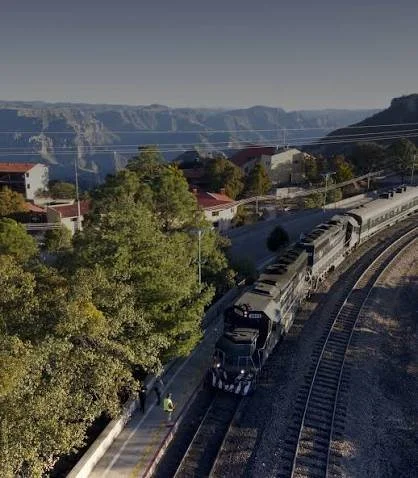
Copper Canyon is much more than the famous view from the CHEPE train.
It lies within the Sierra Madre Occidental volcanic field, an immense geological province extending across western Mexico. Geological research specifically within the Copper Canyon region has documented thick and complex volcanic sequences associated with numerous overlapping caldera systems.[2]
Research by Swanson and colleagues found that volcanic activity in this part of the Sierra Madre Occidental was particularly intense approximately 30 million years ago. Their work describes the Copper Canyon–Tomóchic area as providing a remarkable view into the geological core of this enormous volcanic field.[2]
The cliffs, mesas, valleys and canyon systems visitors encounter today therefore represent far more than beautiful scenery.
They are part of the Earth’s geological record.
This is geoheritage — geological features, landscapes and processes that have scientific, educational, cultural and aesthetic value worthy of understanding and conservation.
But geology alone does not tell the complete story of the Sierra
From geoheritage to geocultural heritage — an increasingly important idea within heritage research is geocultural heritage.[1]
It asks us to look beyond the artificial separation we often make between “nature” and “culture.”
Landscapes influence people.
And people develop knowledge, stories, livelihoods, practices and identities through their relationships with landscapes.
Few places illustrate the importance of considering these relationships more clearly than the Sierra Tarahumara.
The immense geography of the barrancas (canyons) influences settlement, movement, agriculture, access to water and communication. Trails connect ranches and communities across terrain where conventional roads remain difficult or impossible.
For the Rarámuri and other Indigenous inhabitants of the Sierra, these mountains and canyons are not scenery presented for visitors.
They are at home within their territory and living cultural spaces.
We therefore believe there is value in thinking about the Sierra Tarahumara not simply as a collection of spectacular canyons, but as a living geocultural landscape.
Its geological, ecological and human stories cannot easily be separated from one another.
A living landscape, not an open-air museum..
A trail may be an extraordinary hiking experience for a traveler. For somebody living in the Sierra, that same trail may form part of everyday movement between family, agricultural land, water sources and neighboring communities.
A remote settlement may appear fascinating to an outsider precisely because it seems removed from conventional tourism. For the people living there, however, it is simply home.
Responsible tourism therefore requires something more sophisticated than protecting scenery.
It requires respecting living cultural landscapes.
And that means asking difficult questions.
Who decides which places should be promoted?
Who benefits economically when visitors arrive?
Who interprets a community’s culture to outsiders?
At what point does curiosity become intrusion?
And how much tourism can a small community absorb before tourism itself begins changing the qualities visitors came to experience?
These questions are particularly relevant in the Sierra Tarahumara.
Research conducted in Creel and Urique found significant challenges in the existing tourism-development model in Barrancas del Cobre, including insufficient participation by local communities and a need to move toward a more endogenous, participatory and locally based model of sustainable tourism.[3]
A separate study examining perceptions among community stakeholders and visitors identified dissatisfaction with the territorial tourism-development model and shortcomings in local social empowerment, economic benefits and mitigation of environmental impacts.[4]
More recent anthropological research has also examined the effects of tourism development on the cultural inference and territorial rights of Rarámuri communities, including Mogótavo, Bacajípare and Huitosachi.[5]
These are issues everyone working in tourism here should take seriously.
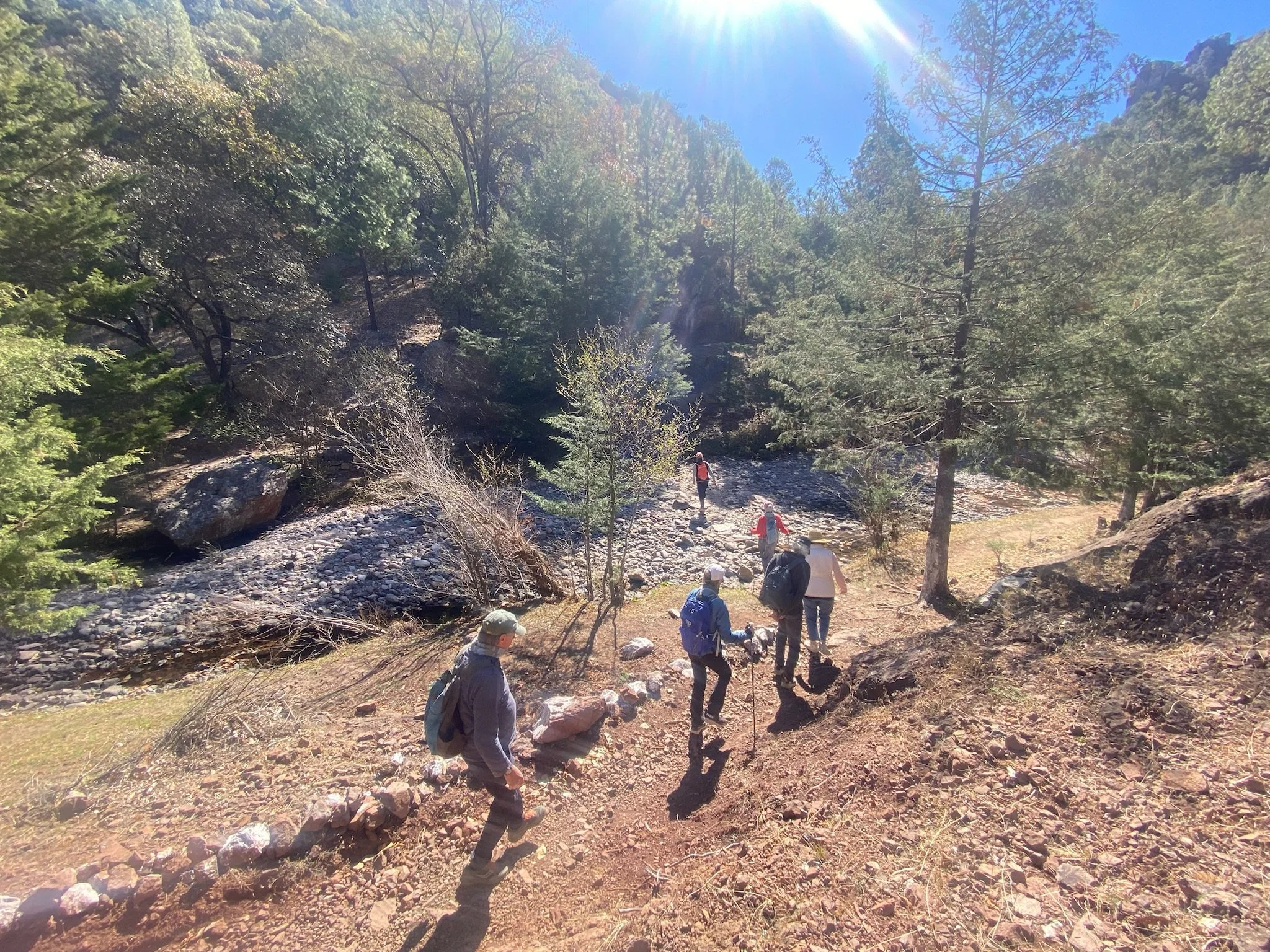
The qualities that make remote destinations desirable are often the same qualities that uncontrolled growth can eventually destroy.
Remoteness creates adventure.
Quiet creates connection with landscape.
Small communities make genuine human encounters possible.
Limited infrastructure can preserve local character.
Living traditions give a destination cultural distinctiveness.
And places that have not reorganized themselves entirely around visitors allow travelers to encounter something increasingly rare: everyday life continuing largely independently of tourism.
The Sierra Tarahumara still possesses much of this.
The CHEPE railway has made parts of Copper Canyon internationally known for decades. Yet move beyond the principal tourism corridors and much of the Sierra remains remarkably removed from mass international tourism.
We do not necessarily see that as a problem to solve.
It may be something worth protecting.
Interestingly, researchers studying sustainable tourism specifically in Barrancas del Cobre have reached a related conclusion. They argue against replicating mass-tourism models that exclude community interests and warn against over-commercialization and transformation of the natural environment and culture.[3]
Tourism can — and should — create economic opportunity
Arguing against mass tourism does not mean arguing against tourism.
We are a tourism company. We believe deeply in the economic and human value that thoughtful travel can create.
Tourism can provide income for guides, drivers, accommodation providers, cooks, artisans, farmers and families throughout the region.
The question is not whether tourism should exist.
The question is:
What kind of tourism creates meaningful local benefit while protecting the place on which that tourism depends?
For the Sierra Tarahumara, we believe one answer lies in value rather than volume.
A smaller number of visitors who stay longer, employ local guides, sleep in locally operated accommodation, eat locally prepared food, purchase locally produced products and spend time understanding the region can create a very different tourism economy from large numbers of visitors passing rapidly through a handful of attractions.
Research in Barrancas del Cobre supports the need for tourism development that is more locally based, participatory and capable of generating greater benefits for local residents.[3][4]
The useful metric therefore may not simply be how many travelers arrive.
It should also be how much value tourism leaves within the Sierra.
From sightseeing to understanding
Imagine looking across one of the great barrancas and understanding that the rocks in front of you record enormous volcanic events tens of millions of years ago.[2]
Imagine travelling through different elevations and beginning to understand why vegetation, climate, agriculture and settlement change so dramatically.
Imagine walking a trail and recognizing that it is not merely a recreational route but part of a much older human geography.
And imagine learning about the Sierra from people whose families have lived within these landscapes for generations.
Travel changes when a landscape becomes intelligible & we understand it’s story.
This is where geotourism can become geocultural tourism — helping travelers understand relationships between geology, ecology, people and place rather than experiencing each in isolation.
Research into geoheritage increasingly recognizes exactly these connections between geology, landscape and cultural heritage.[1]
And understanding creates another possibility: People are more likely to recognize why a place deserves protection when they understand what makes it exceptional.
We would like to see a future in which the Sierra Tarahumara becomes better understood without necessarily becoming dramatically busier.
A region where geological heritage is researched, interpreted and conserved.
Where the Sierra’s importance as a geocultural landscape receives greater recognition.
Where Rarámuri and other local communities have meaningful agency over how tourism interacts with their territories and cultures.
Where tourism expenditure reaches local guides, families and businesses.
Where small-group travel creates economic value without requiring mass visitation.
Where geological and cultural interpretation becomes an important part of the visitor experience.
Where the possibility of greater protection and international geoheritage recognition is seriously investigated.
What should the future of tourism in the Sierra look like?
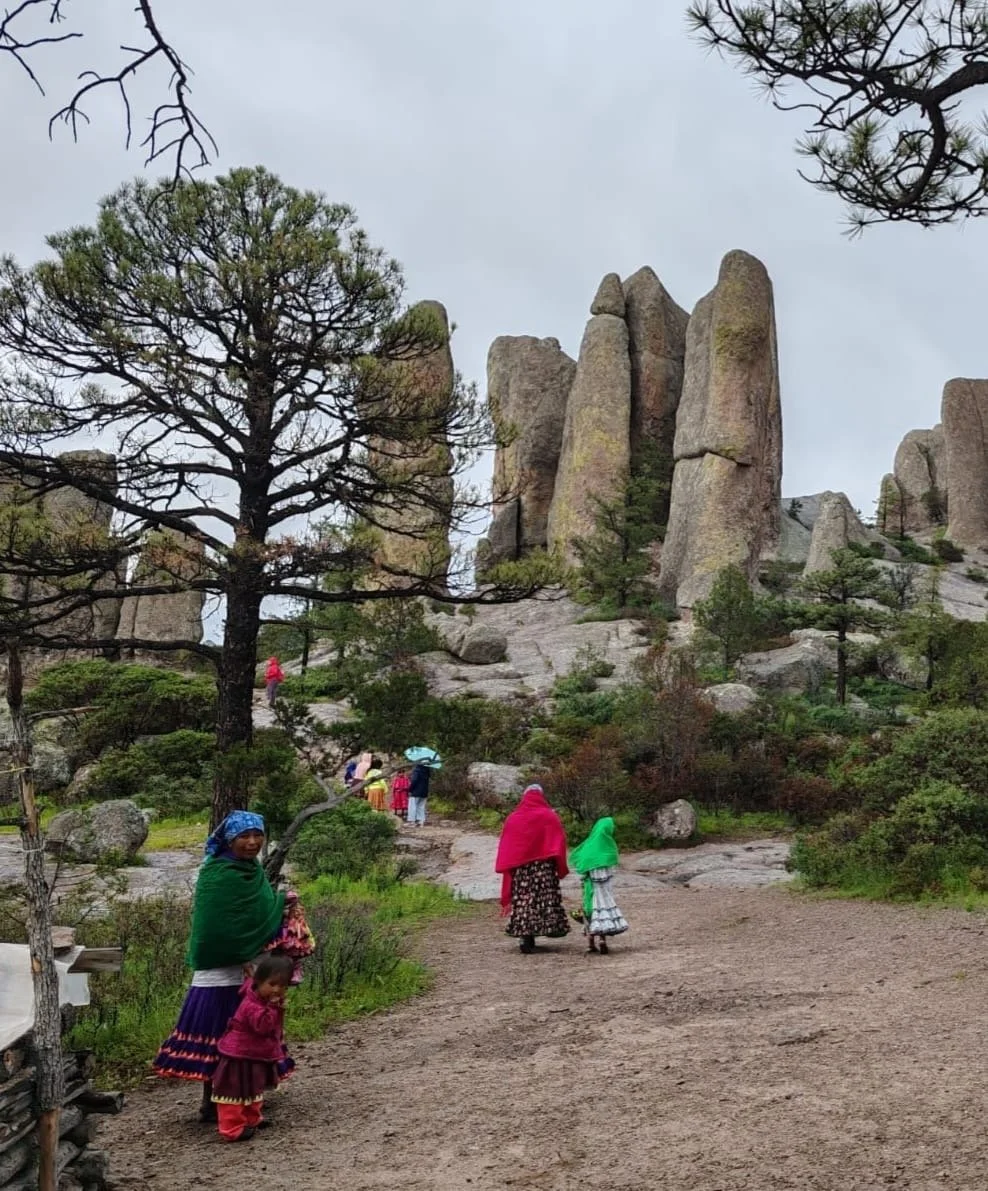
And where environmental, social and cultural carrying capacity influences tourism decisions before overtourism forces those decisions upon us.
There are still places in the Sierra where the road ends.
There are still trails where you can walk for hours without encountering another traveler.
There are communities where tourism remains peripheral rather than the organizing force of everyday life.
There are landscapes where silence remains part of the experience.
Those things have value.
Perhaps the challenge facing tourism in the Sierra Tarahumara is therefore not simply figuring out how to bring more people here.
It is deciding what kind of tourism this extraordinary geocultural landscape deserves — and how we can ensure that what makes it extraordinary is still here generations from now.
Our responsibility as a local tour operator
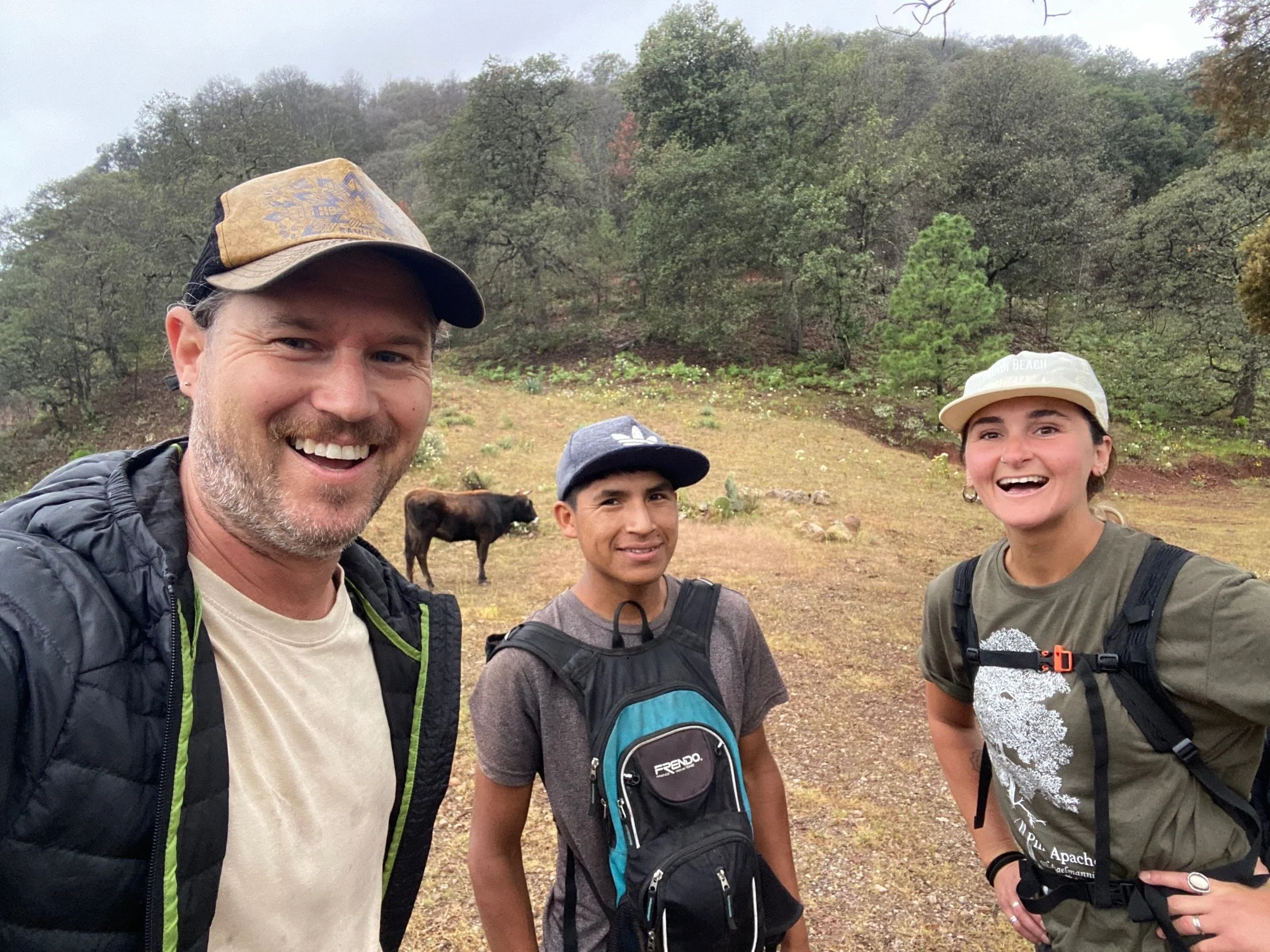
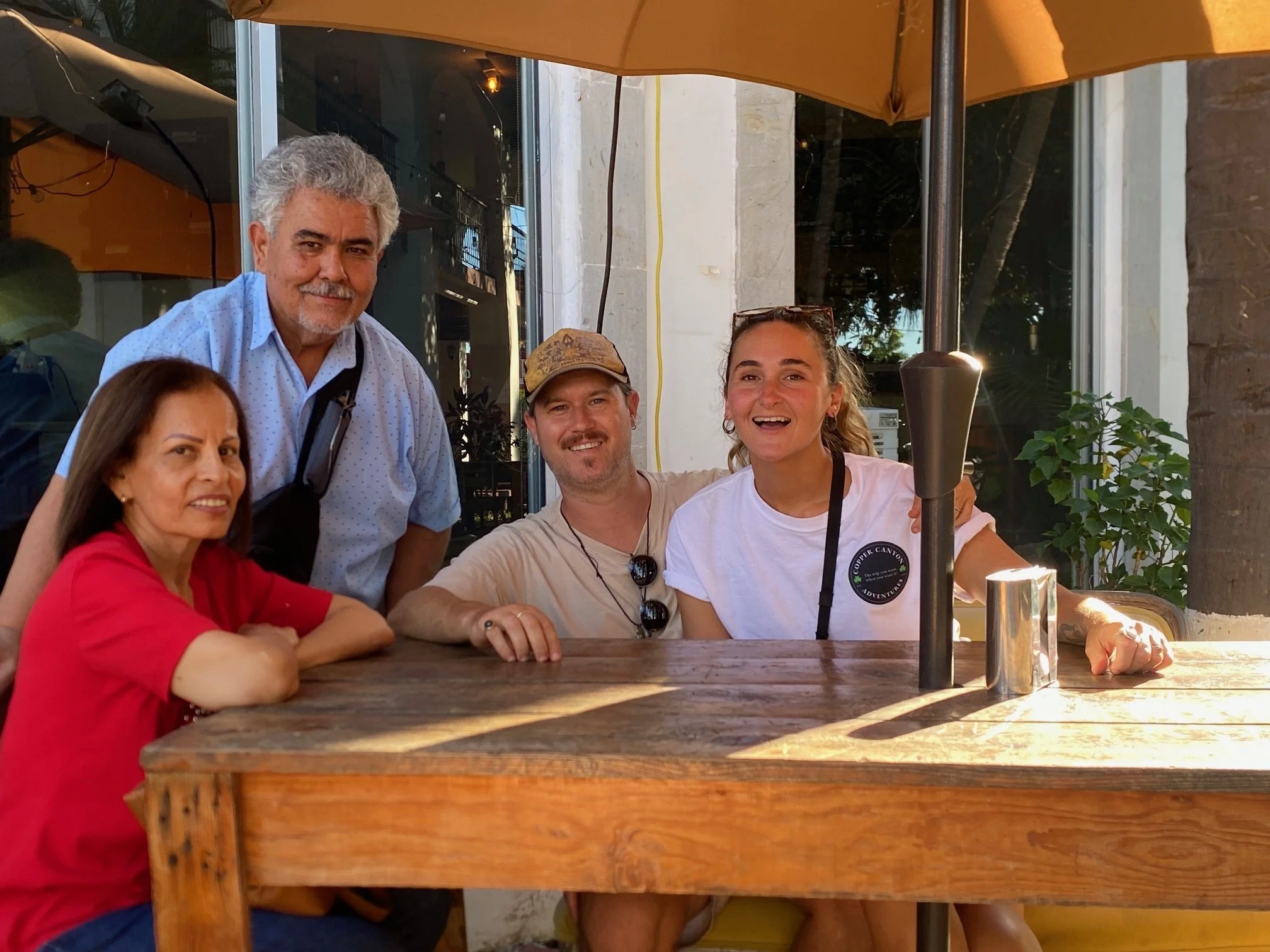
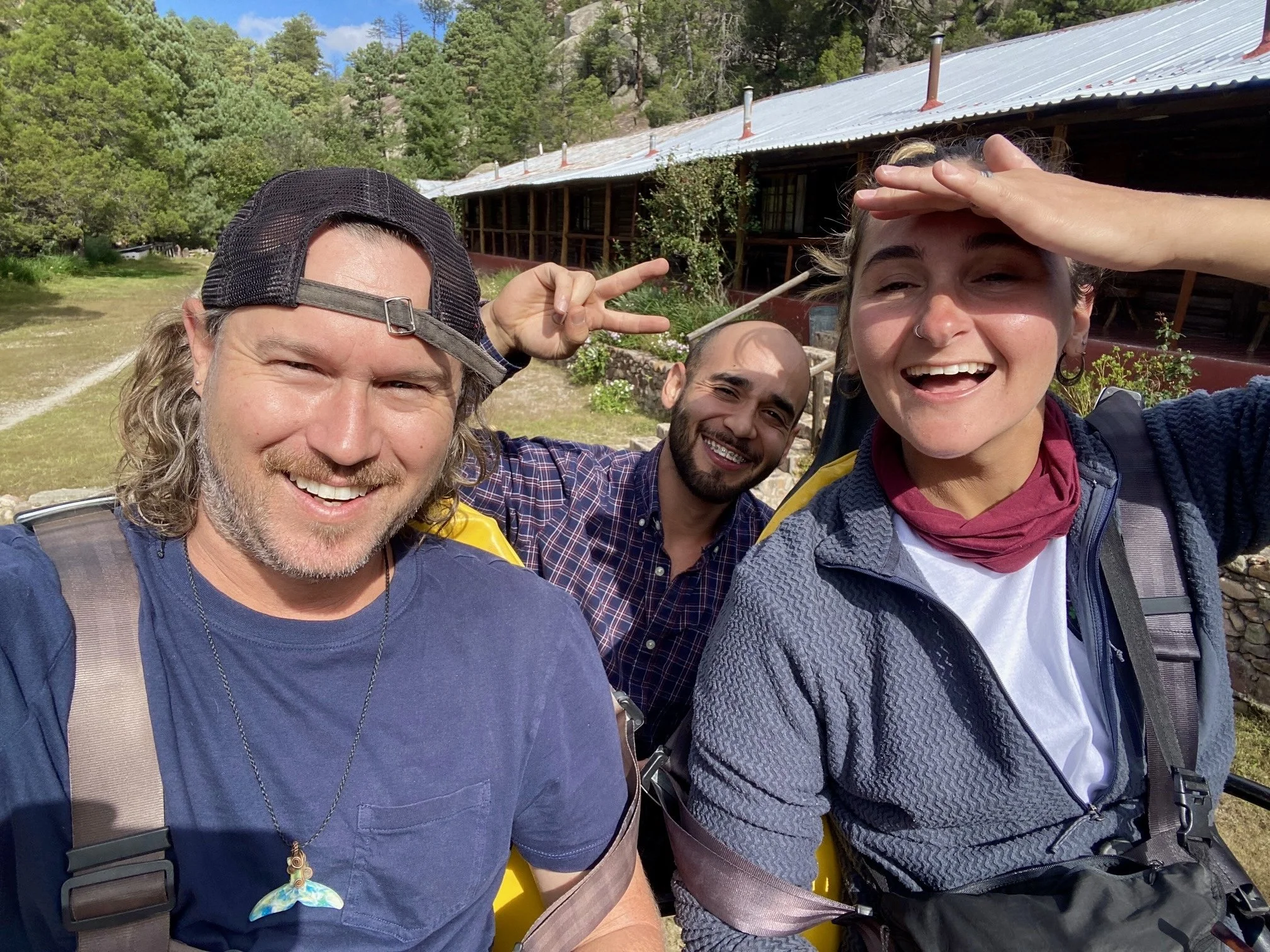
Copper Canyon Adventures has been bringing travelers into this region since 1999.
Our livelihood depends upon people wanting to experience the Sierra Tarahumara.
That gives us an obvious interest in tourism.
But it also gives us a responsibility to the destination on which our business depends.
For us, conscious tourism means continually asking whether an experience benefits the people who live here, whether group sizes are appropriate, whether local guides and businesses participate economically, whether travelers understand the places they enter, and whether an activity creates unnecessary pressure on a community or environment.
We also believe responsible tourism sometimes requires restraint.
Not every beautiful place needs to become an attraction.
Not every community needs to become a tourism product.
Not every trail needs to appear online.
And not every increase in visitor numbers represents progress.
Responsible tourism is not something a business can simply declare itself to practice. It is our ongoing process of feedback, observation, questioning and adaptation to ensure the protection of the Sierra Tarahumara.
Research & Further Reading
[1] Reynard, E. & Giusti, C. (2018). “The Landscape and the Cultural Value of Geoheritage.” In Geoheritage: Assessment, Protection, and Management, pp. 147–166. Elsevier. DOI: 10.1016/B978-0-12-809531-7.00008-3.
Relevant to the concepts of geocultural heritage and the relationships between geological landscapes, society and culture.
[2] Swanson, E.R., Kempter, K.A., McDowell, F.W. & McIntosh, W.C. (2006). “Major ignimbrites and volcanic centers of the Copper Canyon area: A view into the core of Mexico’s Sierra Madre Occidental.” Geosphere, 2(3), 125–141. DOI: 10.1130/GES00042.1.
Peer-reviewed geological research specifically examining the Copper Canyon region and its volcanic history.
[3] González Herrera, M.R., Álvarez Hernández, J.A. & Azpeitia Herrera, L.D. (2019). “Desafíos para el turismo sustentable de base local en Barrancas del Cobre, Chihuahua, México.” El Periplo Sustentable, 36, 325–371. DOI: 10.36677/elperiplo.v0i36.9044.
Copper Canyon-specific research examining community participation, sustainability, local economic benefit and alternative models of tourism development.
[4] González Herrera, M.R., Sasidharan, V., Álvarez Hernández, J.A. & Azpeitia Herrera, L.D. (2018). “Quality and sustainability of tourism development in Copper Canyon, Mexico: Perceptions of community stakeholders and visitors.” Tourism Management Perspectives. DOI: 10.1016/j.tmp.2018.05.003.
Research comparing stakeholder and visitor perspectives on the sustainability of tourism development in Copper Canyon.
[5] Morales-Muñoz, M.V. & Loera González, J.J. (2024). “Turismo en la Sierra Tarahumara, México: Afectaciones culturales y derecho indígena en comunidades rarámuri.” Revista Latinoamericana de Antropología del Trabajo, 8(18).
Research examining tourism development, territorial and cultural rights, and Rarámuri communities in the Sierra Tarahumara.